How To Protect Koi From Herons, Raccoons, And Other Predators
Jul 30th 2026

Jul 30th 2026
Koi fish are beautiful, peaceful, and easy to spot in a clear backyard pond. That’s exactly why predators notice them too. Herons, raccoons, cats, foxes, mink, otters, and some birds of prey may all prey on pond fish, especially when the water is shallow, open, or easily accessible.
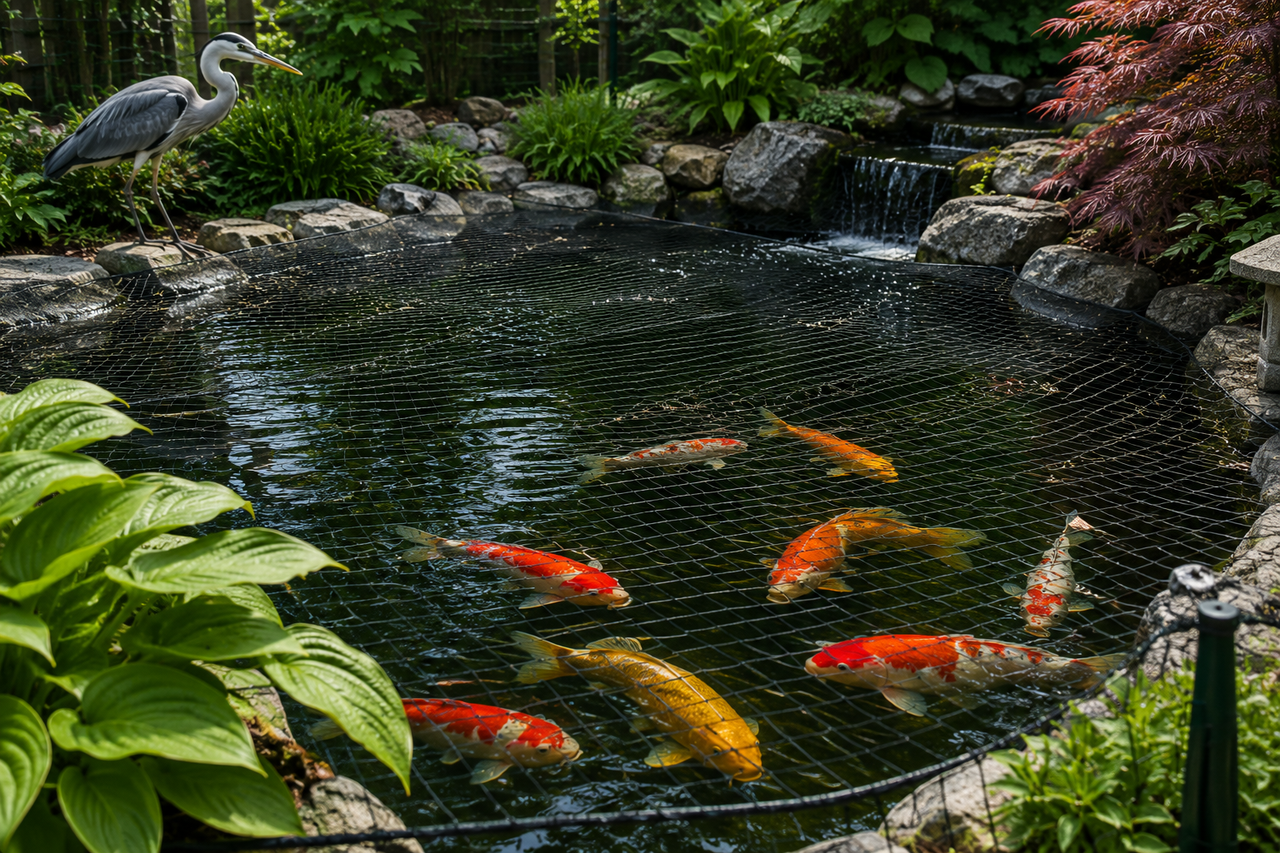
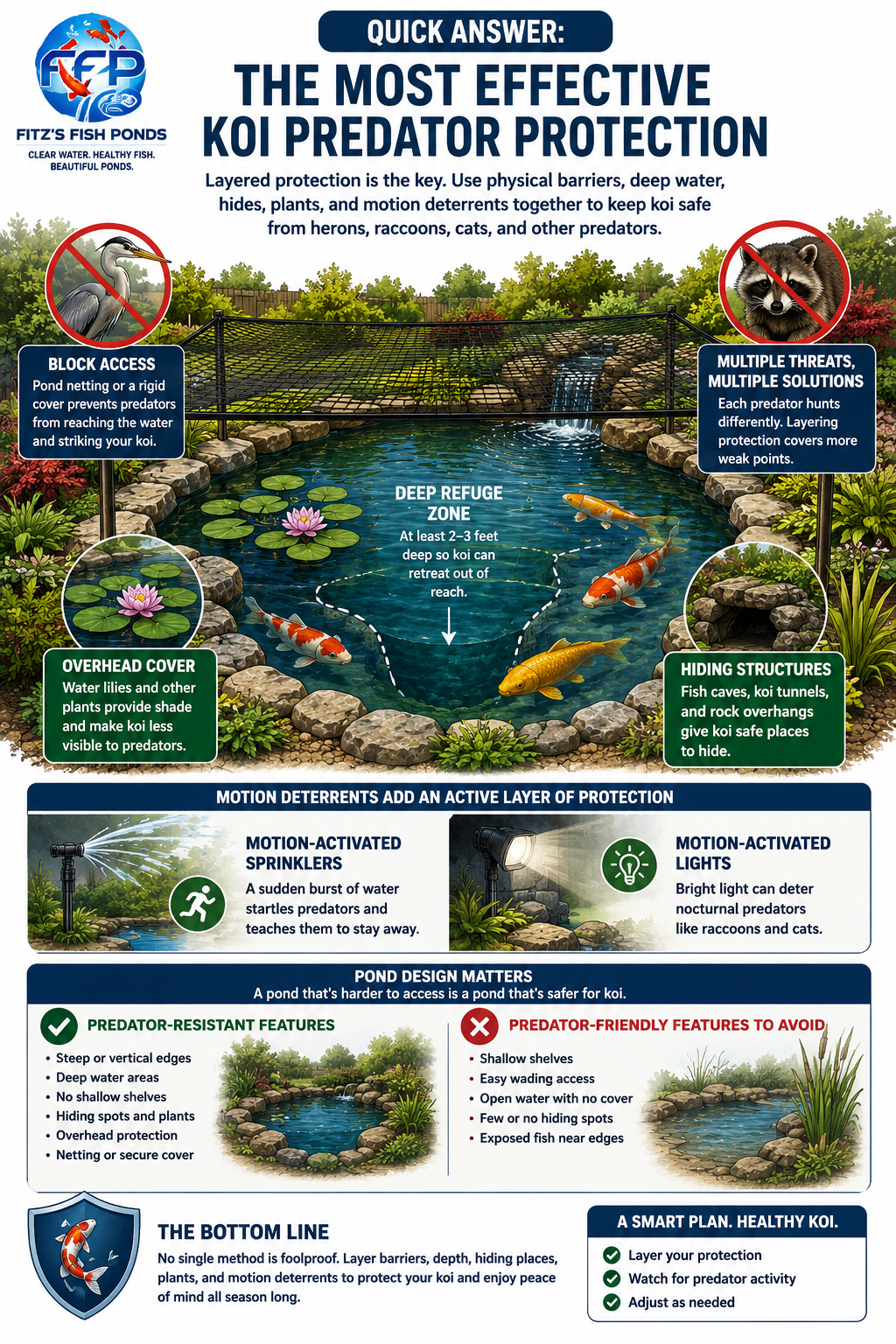
The best way to protect koi from predators is to layer several defenses together. Pond netting or a secure cover, deeper water, steep edges, fish caves, plant cover, and motion-activated deterrents all work better together than any single trick. A hungry heron or raccoon can adapt, so the goal is to make the pond harder to access, harder to hunt, and easier for koi to escape.
The strongest protection for koi predators usually starts with physical barriers. Taut pond netting or a rigid cover can prevent many direct attacks by blocking access to the water surface. Add a deeper refuge zone, hiding structures, and motion-activated sprinklers or lights, and the pond becomes much less inviting.
Layering works because each predator hunts differently. A heron may stalk from the edge and strike from above. A raccoon may reach from a shallow shelf or move rocks near the pond. A cat may target smaller fish in shallow water. A single deterrent may help, but several together cover more weak points.
A practical protection plan may include:
Pond netting is one of the most dependable ways to protect koi, but some pond owners prefer an option that does not cover the entire water feature. Fishing lines and bamboo barriers offer two creative alternatives that can help discourage certain predators while preserving a more open, natural-looking pond.
Fish caves, such as the EasyPro Log Fish Cave, add another layer of protection by providing koi with a secure place to retreat when a predator approaches. These submerged shelters are especially useful in ponds that lack deep water, dense plant cover, or natural hiding areas.
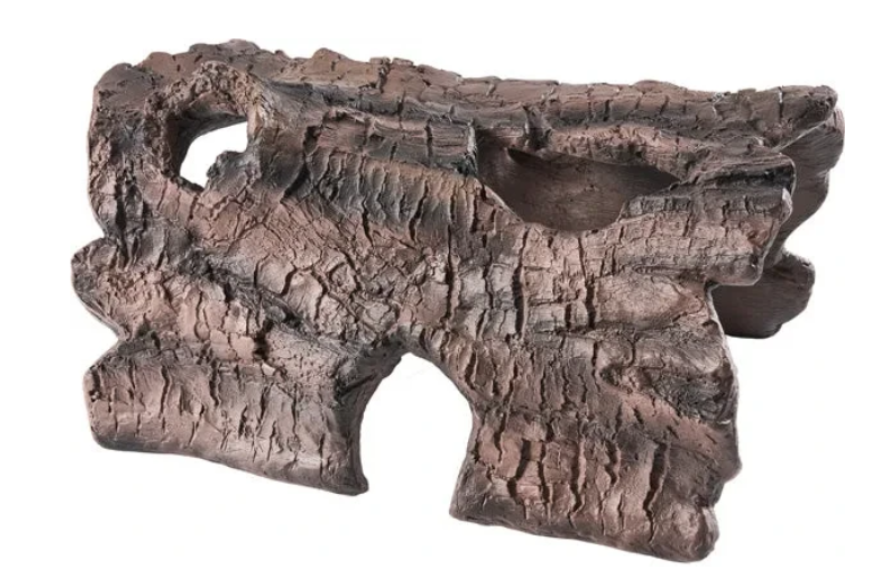
A properly sized cave should be large enough for koi to enter comfortably while remaining low and enclosed enough to limit access from herons, raccoons, and other predators. Fish caves work best when placed in a deeper section of the pond where koi can reach them quickly without becoming trapped. They should also be inspected regularly to ensure debris does not block the entrance or impede water circulation.
Clear monofilament fishing line can be stretched between short stakes around the perimeter of the pond. This method is primarily intended to discourage herons, egrets, and other long-legged birds that typically land nearby and walk toward the water before striking.
When the bird encounters an unexpected line around its legs or chest, it may become uncomfortable and move away. Multiple strands installed at different heights can make the barrier more difficult to step over than a single line.
Fishing line is less visually noticeable than traditional netting, which makes it appealing for formal ponds, backyard water gardens, and areas where appearance is a priority. However, the line must remain tight and should never sag into the water. Pond owners should also mark or position it carefully near walkways to reduce the risk of people, pets, or wildlife becoming tangled.
This approach is most effective against wading birds. It is unlikely to stop raccoons, mink, otters, snakes, or other predators that can crawl, climb, or enter the pond from different angles.
Bamboo poles can be positioned around the pond and used as natural-looking anchor points for fishing lines. The line is then stretched between the poles in a loose grid or irregular crisscross pattern above the water.
An overhead grid can make it difficult for a heron to land beside the pond, step into a shallow area, or find a clear path for striking at the fish. Bamboo blends more naturally into many pond landscapes than metal stakes or permanent fencing, making it a practical choice for owners who want predator protection without dramatically altering the pond's appearance.
The spacing of the line is important. A few widely spaced strands may leave openings that a determined bird can use. The layout should interrupt clear landing and hunting paths while still allowing access for routine pond maintenance.
Fishing line and bamboo systems should be treated as deterrents rather than guaranteed protection. The strongest predator-control plan usually combines several methods, such as deep water, steep pond walls, fish caves, dense plant coverage, motion-activated sprinklers, and regular observation. Layering these defenses gives koi more opportunities to hide and makes the pond less attractive to predators.
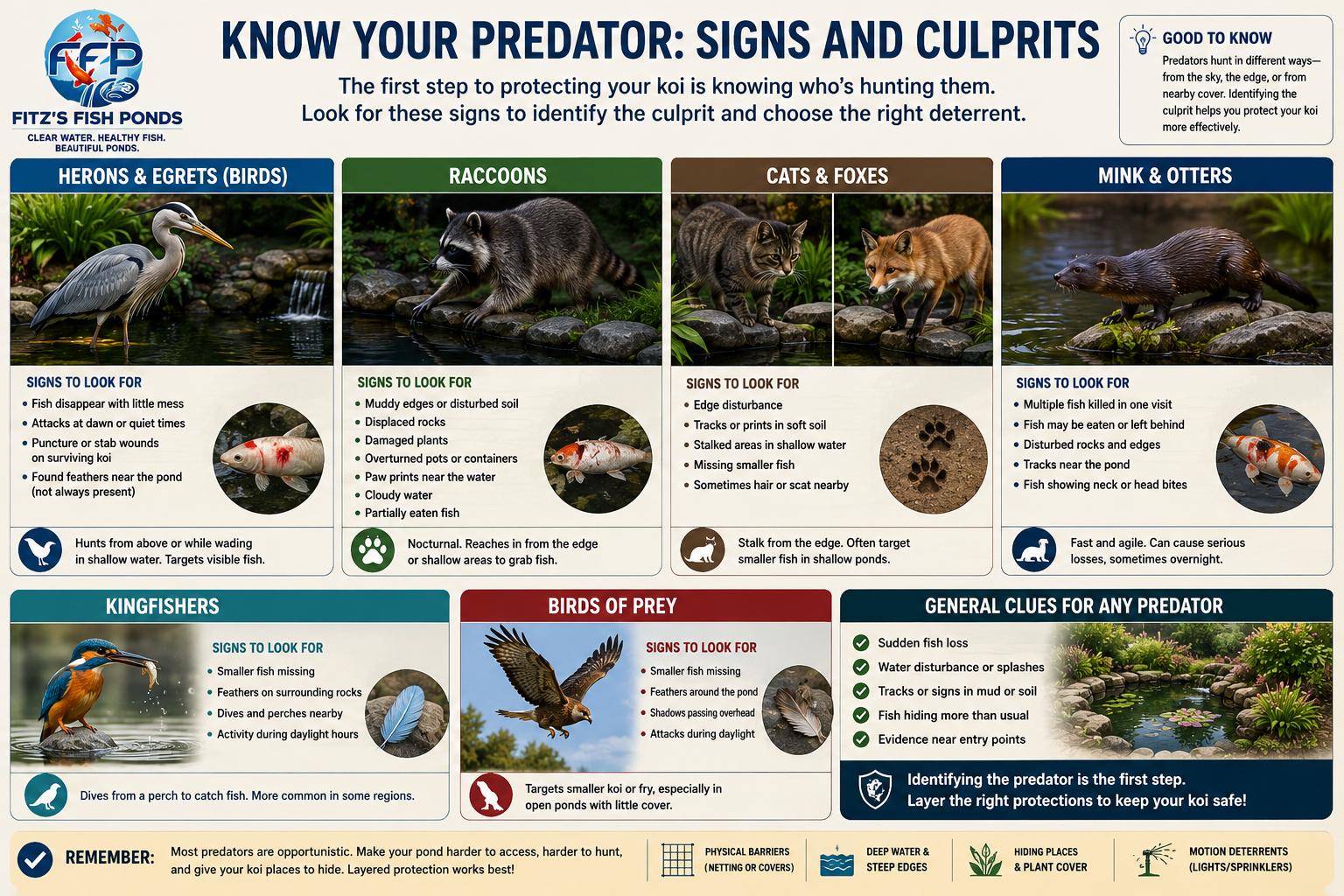
The first step is figuring out what’s hunting your pond. Missing fish alone doesn’t always tell the full story, but the pond often leaves clues. The right deterrent depends on whether the threat is coming from the sky, the edge, or inside nearby brush and landscaping.
Herons and egrets often leave very little mess. Fish may disappear at dawn or during quiet parts of the day, and injured survivors may show puncture or stab wounds. A feather near the pond can be a clue, but many bird attacks happen without obvious evidence.
Raccoons usually leave more disruption. You may notice muddy edges, displaced rocks, damaged plants, overturned pots, paw prints, cloudy water, or partially eaten fish. Cats and foxes can also disturb the edges, especially around shallow ponds or ponds with smaller fish.
Mink and otters are less common in many backyard settings, but they can cause serious losses where they’re active. They may kill multiple fish in one visit. In some regions, kingfishers and birds of prey can also be an issue, especially for smaller pond fish in open water.
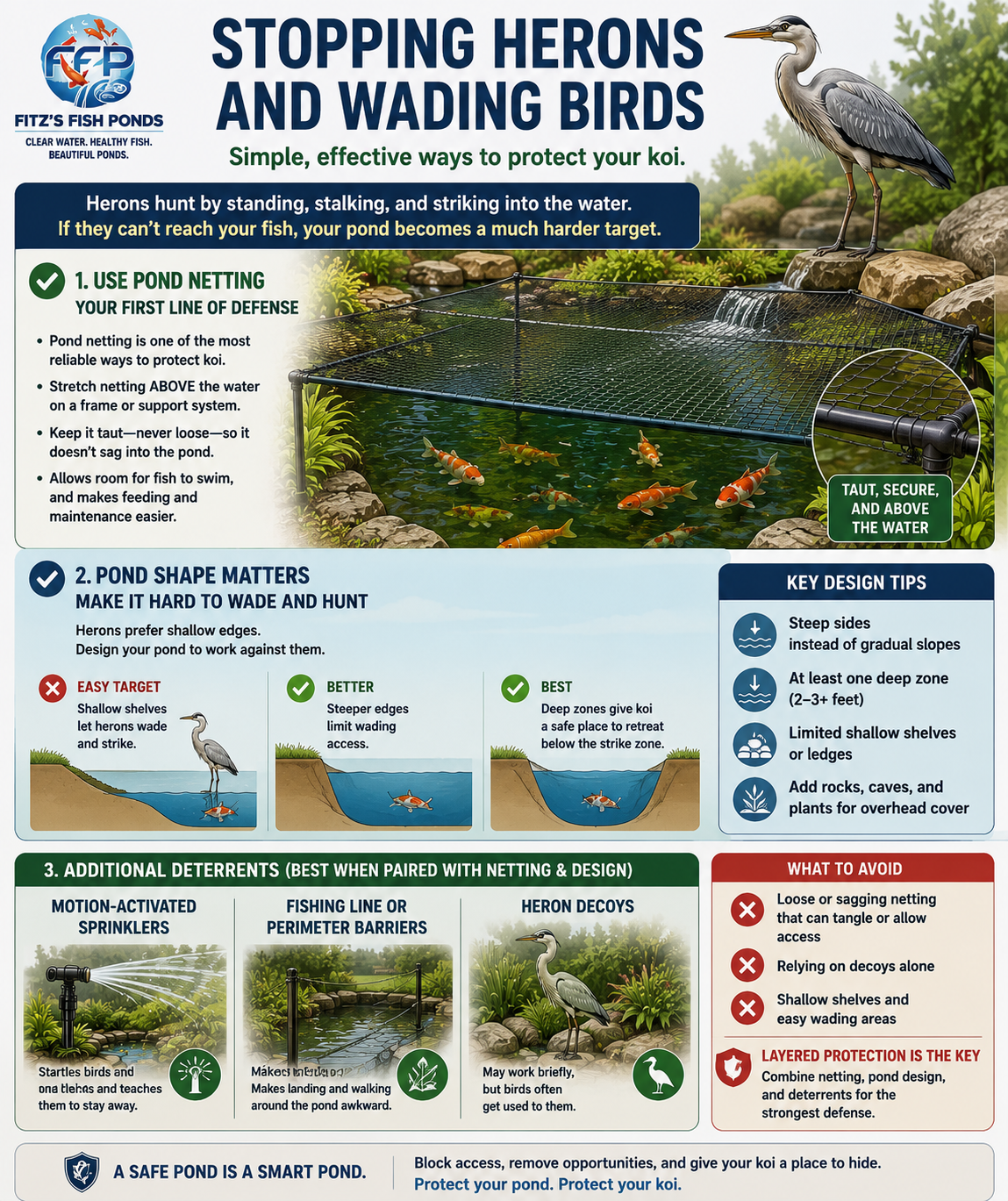
Pond netting is one of the most reliable ways to protect koi from herons. A heron hunts by standing, stalking, and striking into the water. If the bird can’t reach the fish, the pond becomes a much harder target.
The netting should be stretched above the water, not left loose where it can sag into the pond. A simple frame or support system can keep the net secure while still allowing room for fish to swim below it. This also makes feeding and maintenance easier than dealing with loose material every day.
Pond shape matters, too. Herons prefer shallow edges where they can wade and hunt. Steep sides, deeper zones, and limited shelves make the pond less comfortable for wading birds. Depth helps because koi can retreat below the easy strike zone.
Other heron deterrents can help, but they’re usually strongest when paired with netting or pond design changes. Motion-activated sprinklers can startle birds away. Fishing line or perimeter barriers can make landing and walking around the pond awkward. Heron decoys may work briefly in some cases, but birds often get used to them.
Adding visual/moving decoys that mimic other animals in or around a pond can be extremely effective. Floating swans, metal bird statues, or windmills can help deter predators; however, they will likely get used to them unless the decoys are moved regularly.
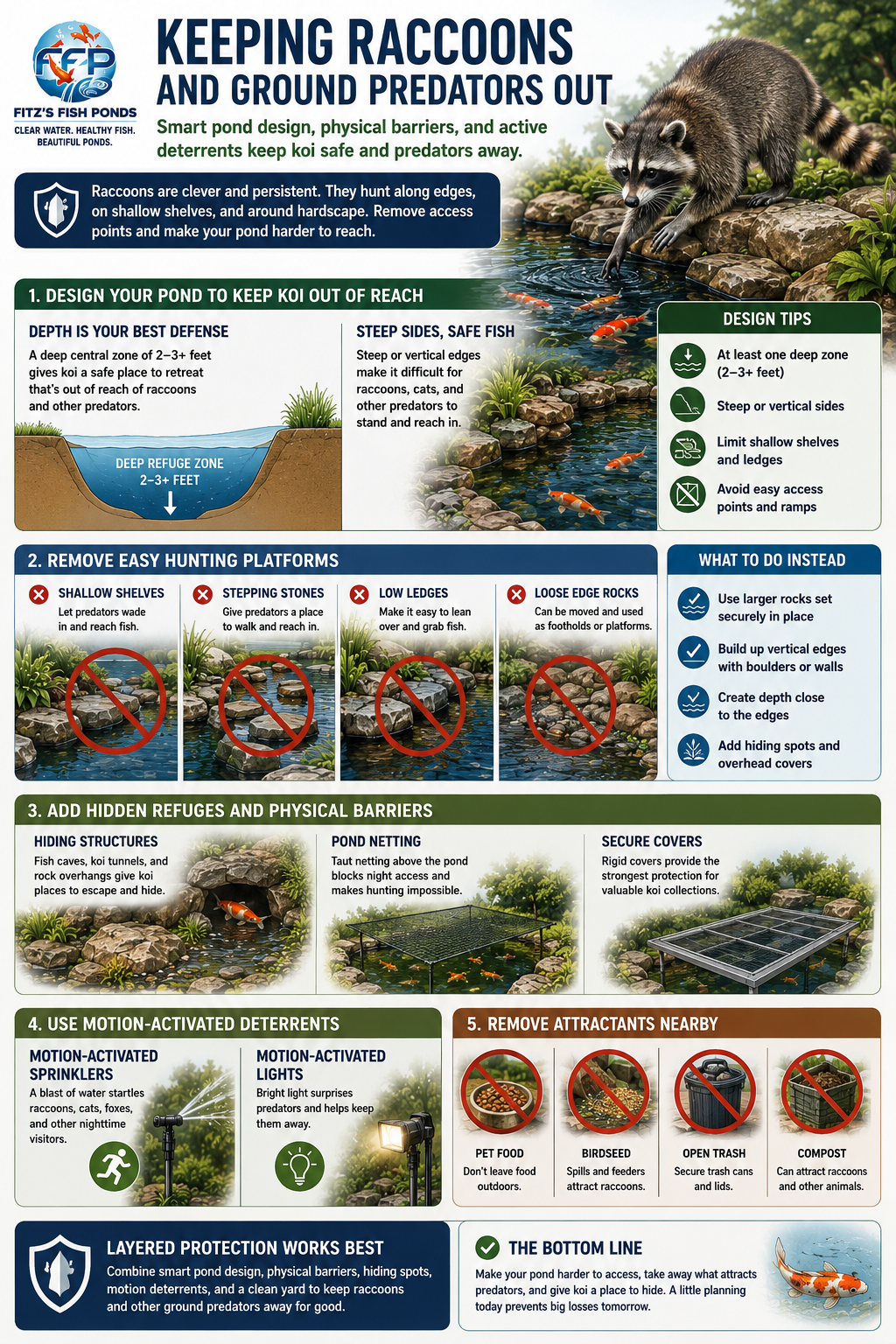
Raccoons are clever, persistent, and comfortable around water. They often hunt along the pond edge, on shallow shelves, on rocks, or near hardscape. A pond with easy access points gives them more opportunities to reach in and grab fish.
The best defense is a pond design that keeps koi out of reach. Steep sides and a deeper central zone can make a major difference. A depth of about 2 to 3 feet or more in at least one refuge area is often used as a practical benchmark for koi ponds, depending on the overall design and climate.
Remove easy hunting platforms where possible. Stepping stones, shallow ledges, low shelves, and loose edge rocks may look natural, but they can also give predators a place to stand. If the pond already has shallow zones, hiding structures and netting become even more important.
Motion-activated lights and sprinklers can help with raccoons, cats, foxes, and other nighttime visitors. It also helps to remove attractants nearby. Pet food, birdseed, open trash, and compost can bring raccoons into the yard, making the pond part of their regular route.
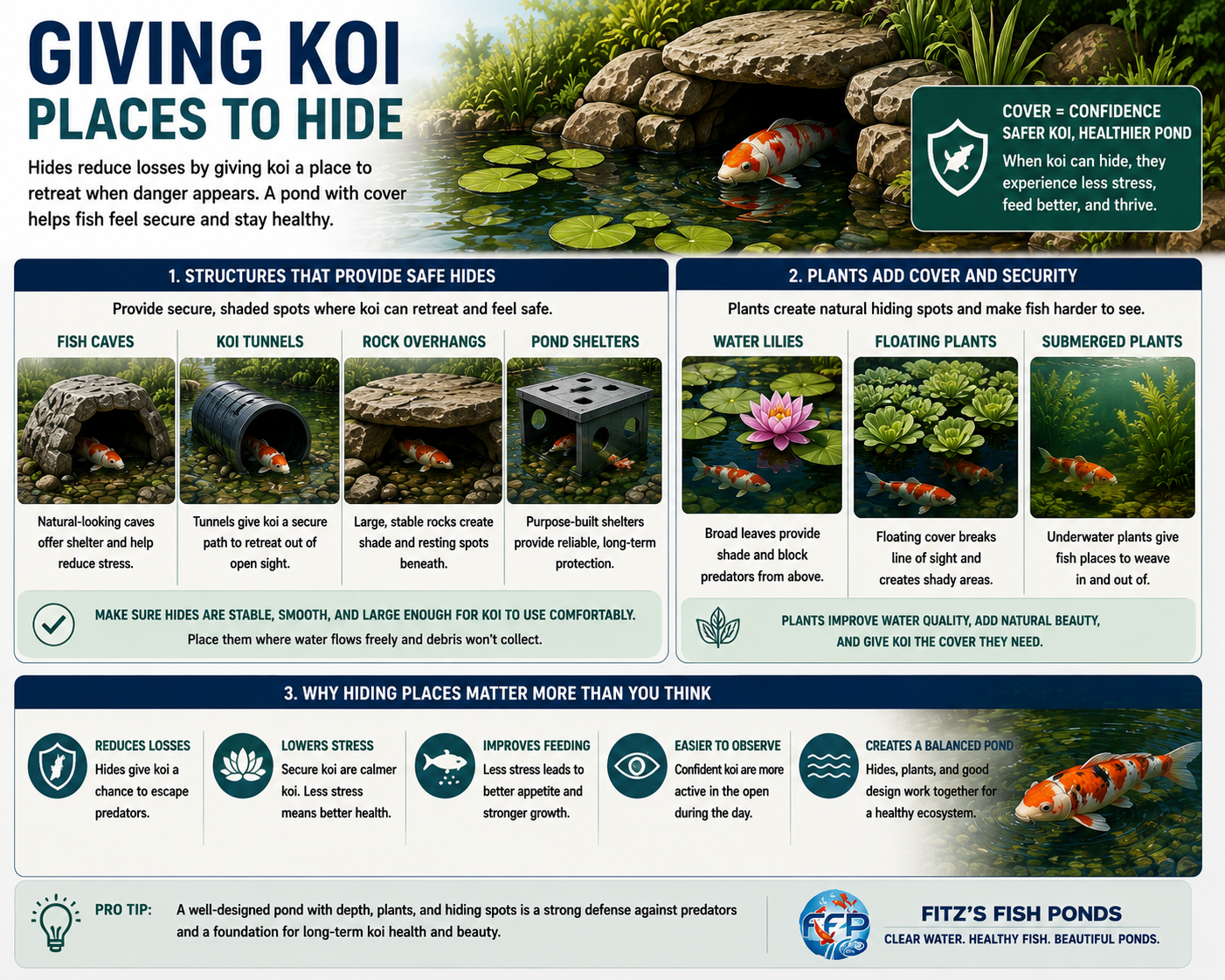
Pond fish hiding spots reduce losses because koi need somewhere to go when danger appears. A pond with no cover leaves fish exposed from above and from the edges. Hides give koi a chance to retreat rather than panic in open water.
Fish caves and koi tunnels, large rock overhangs, and purpose-built pond shelters can all work well when installed safely. They should be stable, large enough for fish to use comfortably, and placed where they don’t trap debris or restrict circulation. Smooth materials are better than sharp or unstable pieces.
Plants can also help. Water lilies, floating plants, and submerged planting areas add overhead cover and make fish harder to spot. They also soften the pond visually, which can make the whole water feature feel more natural.
Hiding places aren’t only for predator protection. They can reduce daily stress and help koi feel more secure. Less stress often means better feeding behavior, easier observation, and a calmer pond overall.
Pond netting, such as the Pond Magic Cover Net below, is one of the simplest and most dependable pond predator deterrents. It physically separates predators from the fish, which is more reliable than hoping a scare device works every time. Netting is especially useful after a predator sighting, during peak heron activity, in fall, or while the homeowner is away.
The safest setup is taut, secure, and raised above the water. Loose netting can sag, collect leaves, interfere with feeding, or create problems for fish. A removable frame can make the setup cleaner and easier to handle.
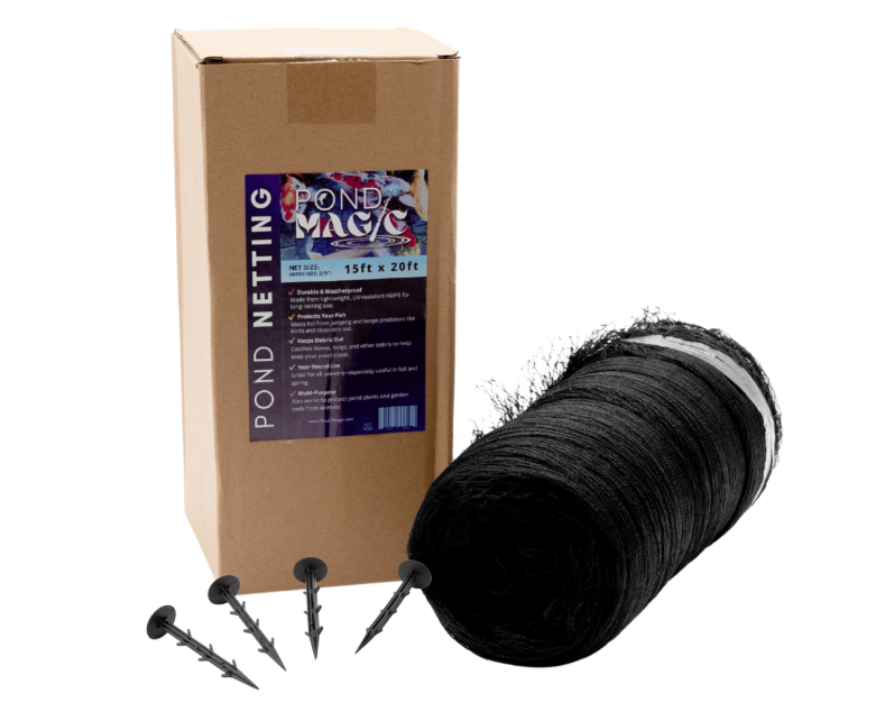
There are trade-offs. Netting can change the look of the pond, and it may need to be cleared of leaves or debris. Still, for valuable koi or repeated predator visits, the added protection is often worth it.
For serious predator pressure, rigid grid covers or custom pond cages may be a better fit. These are stronger and more secure than lightweight seasonal netting. They can be especially useful for high-value koi collections or ponds with repeated losses.
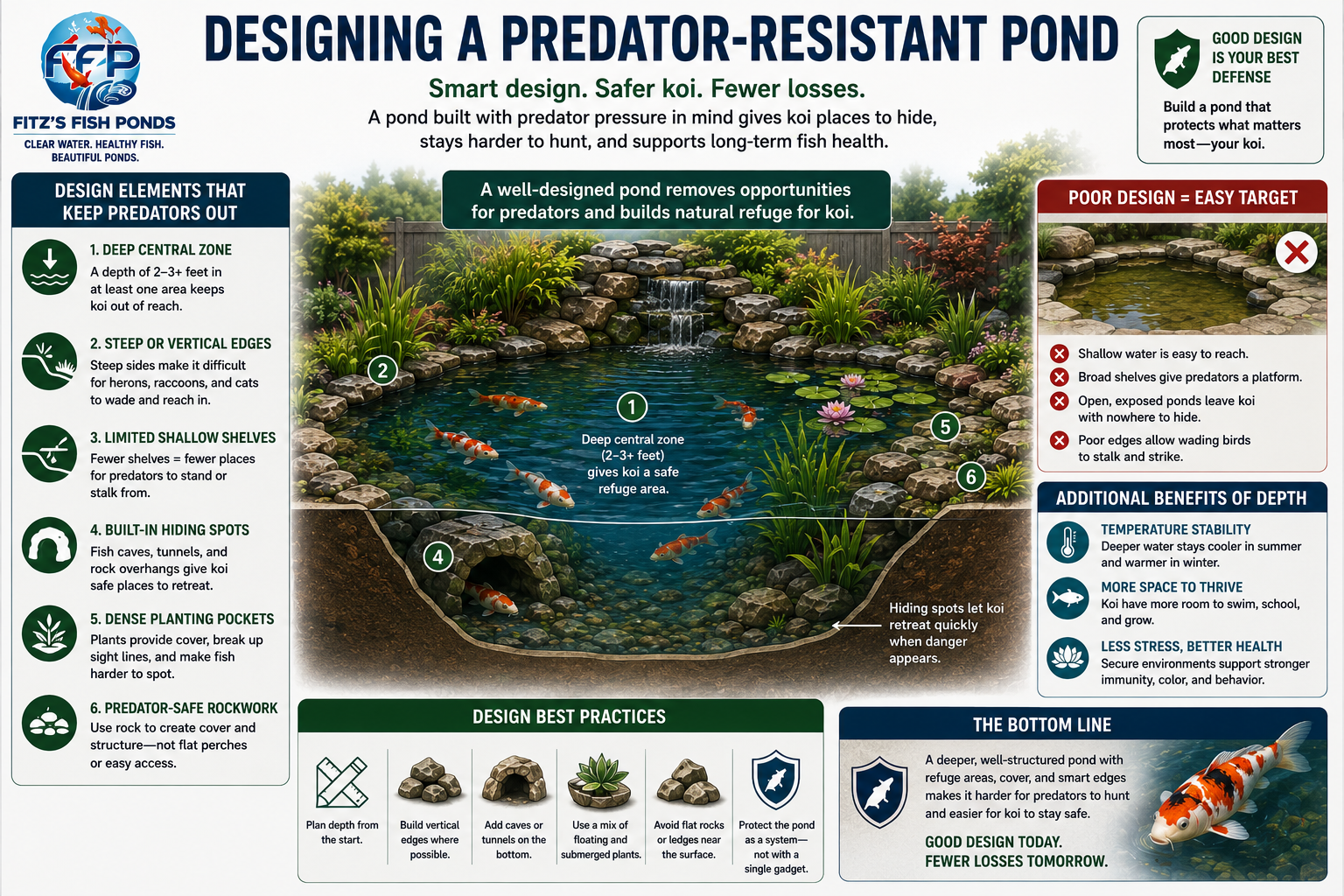
The long-term fix is a pond designed with predator pressure in mind. A shallow, open pond with broad shelves and no cover is much easier to hunt. A deeper pond with steep edges, refuge areas, and built-in hiding spots gives koi a better chance.
A predator-resistant pond may include a deep central zone, limited shallow shelves, vertical or steep edges, fish caves, dense planting pockets, and rockwork that protects fish instead of creating predator platforms. The design should let koi retreat quickly when they sense danger.
Depth has other benefits too. It can help with temperature stability in summer and winter, depending on the region and pond design. It also gives fish more room to move, school, and settle away from stress.
If a pond keeps losing fish, the issue may not be one missing gadget. The pond may need better edges, more depth, stronger netting, or safer hiding areas.
Predator protection should repel wildlife, not harm it. Netting, covers, motion sprinklers, lights, deeper water, and habitat changes are practical, humane tools. Traps, poisons, injury-based methods, or anything that harms protected wildlife should be avoided.
This is especially important with birds. The U.S. Fish and Wildlife Service explains that the Migratory Bird Treaty Act protects listed migratory bird species and generally prohibits taking, capturing, killing, selling, trading, or transporting them without authorization. (U.S. Fish and Wildlife Service) The protected species list is maintained under federal regulations, with the U.S. Fish and Wildlife Service noting the list is located at 50 CFR 10.13. (U.S. Fish and Wildlife Service)
The smart approach is exclusion and deterrence. Make the pond harder to hunt, reduce access, remove attractants, and give koi safe refuge. That protects the fish without creating legal or wildlife problems.
The best koi predator protection starts with identifying the threat. Herons, raccoons, cats, foxes, mink, otters, and birds of prey leave different signs and respond to different deterrents. Once you know the likely predator, it’s easier to choose the right mix of protection.
No single method is foolproof. Netting, deep water, hiding spots, motion deterrents, and smart edge design are strongest when used together. The goal is to make the pond harder to enter, harder to hunt, and safer for koi when predators appear.
If koi keep disappearing, don’t rely on guesswork. Look for signs, test your setup, and strengthen the weak points. A pond with good depth, secure cover, and real hiding places gives koi a much better chance to stay safe.
Some predator problems can be handled with DIY netting, fish caves, and motion sprinklers. Repeated losses are different. If herons, raccoons, or other predators keep returning, the pond may need a smarter long-term fix.
Professional help makes sense if the pond is too shallow, has wide shelves, lacks hiding areas, or is difficult to net cleanly. It can also help if the koi are large, valuable, or part of a long-term collection. A pond expert can assess depth, edge shape, circulation, planting, netting options, and whether a renovation or redesign would make the pond safer.
Fitz’s Fish Ponds designs and builds koi ponds with fish health, beauty, and protection in mind. From deeper refuge zones and better edge design to pond construction, renovation, filtration, fall netting, and ongoing pond services, their team can help create a pond that’s harder for predators to hunt and easier for koi to thrive in. If predator pressure is becoming a recurring problem, talk to Fitz’s Fish Ponds about building or improving a pond that protects what matters most.
What Is The Most Effective Way To Protect Koi From Predators?
Layered protection is the most effective approach. Pond netting or a rigid cover can block direct access, while deep water and hiding spots give koi a safe place to retreat. Motion-activated sprinklers or lights can add another layer of deterrence. The strongest setup combines several methods rather than relying on one product.
How Do I Keep Herons Away From My Pond?
Taut pond netting, steep pond edges, deeper water, and motion-activated sprinklers are some of the strongest heron deterrents. Herons hunt by wading and striking, so blocking access to the water is key. Decoys may help briefly, but they are not dependable on their own. A pond with netting, depth, and limited shallow access is much harder for herons to hunt.
How Do I Stop Raccoons From Eating My Koi?
Focus on making the pond harder to reach from the edges. Steep sides, deeper water, fish caves, secure netting, and motion-activated lights or sprinklers can all help. Remove shallow ledges, loose stepping stones, and nearby food sources that attract raccoons. Pet food, trash, and birdseed can bring raccoons into the yard before they ever notice the pond.
How Deep Should A Koi Pond Be To Deter Predators?
Many koi ponds benefit from a deep refuge zone of about 2 to 3 feet or more, depending on climate, pond size, and design. Depth helps keep koi out of reach of wading birds and animals reaching from the edge. Shallow ponds are easier for predators to hunt because fish have fewer places to escape. Depth works best when paired with steep edges and hiding structures.
Will Pond Netting Hurt My Fish?
Properly installed pond netting should not hurt koi. The key is to keep the net taut and suspended above the water rather than letting it sag into the pond. Loose netting can collect debris, interfere with fish movement, or become harder to manage. A simple frame can make netting safer, cleaner, and easier to remove when needed.
Do Heron Decoys Actually Work?
Heron decoys may work briefly in some ponds, but they are often unreliable over time. Herons can become accustomed to them, and their territorial behavior changes with the season. A decoy also does nothing to physically block a bird from hunting. Netting, deeper water, steep edges, and motion deterrents are stronger choices.
What Animals Eat Koi Fish?
Common koi predators include herons, egrets, raccoons, cats, foxes, mink, otters, kingfishers, and birds of prey, where they are regionally present. The most likely predator depends on where you live, the pond’s design, and the signs left behind. Missing fish with little mess may point to birds, while muddy edges and disturbed rocks often suggest raccoons. Testing the evidence helps you choose the right deterrent.
How Can I Give My Koi Places To Hide From Predators?
Fish caves, koi tunnels, rock overhangs, water lilies, floating plants, submerged structures, and deep refuge zones can all give koi places to hide. The best hiding spots are stable, safe, and large enough for the fish to use comfortably. They should also be placed where predators can’t easily reach into them. Good hiding places protect koi and can reduce stress in daily pond life.
| Hours | |
|---|---|
| sunday | 10:00 AM - 4:00 PM |
| monday | Closed |
| tuesday | 10:00 AM - 5:00 PM |
| wednesday | 10:00 AM - 5:00 PM |
| thursday | 10:00 AM - 5:00 PM |
| friday | 10:00 AM - 5:00 PM |
| saturday | 10:00 AM - 5:00 PM |
| Hours | |
|---|---|
| sunday | 10:00 AM - 5:00 PM |
| monday | Closed |
| tuesday | 11:00 AM - 6:00 PM |
| wednesday | 11:00 AM - 6:00 PM |
| thursday | 11:00 AM - 6:00 PM |
| friday | 11:00 AM - 6:00 PM |
| saturday | 10:00 AM - 5:00 PM |
| Hours | |
|---|---|
| sunday | 10:00 AM - 4:00 PM |
| monday | Closed |
| tuesday | 10:00 AM - 5:00 PM |
| wednesday | 10:00 AM - 5:00 PM |
| thursday | 10:00 AM - 5:00 PM |
| friday | 10:00 AM - 5:00 PM |
| saturday | 10:00 AM - 5:00 PM |
| Hours | |
|---|---|
| sunday | 10:00 AM - 5:00 PM |
| monday | Closed |
| tuesday | 11:00 AM - 6:00 PM |
| wednesday | 11:00 AM - 6:00 PM |
| thursday | 11:00 AM - 6:00 PM |
| friday | 11:00 AM - 6:00 PM |
| saturday | 10:00 AM - 5:00 PM |
| Hours | |
|---|---|
| sunday | Closed |
| monday | 10:00 AM - 4:00 PM |
| tuesday | 10:00 AM - 4:00 PM |
| wednesday | 10:00 AM - 4:00 PM |
| thursday | 10:00 AM - 4:00 PM |
| friday | 10:00 AM - 4:00 PM |
| saturday | Closed |
| Hours | |
|---|---|
| sunday | 10:00 AM - 4:00 PM |
| monday | Closed |
| tuesday | 10:00 AM - 5:00 PM |
| wednesday | 10:00 AM - 5:00 PM |
| thursday | 10:00 AM - 5:00 PM |
| friday | 10:00 AM - 5:00 PM |
| saturday | 10:00 AM - 5:00 PM |
| Hours | |
|---|---|
| sunday | Closed |
| monday | Closed |
| tuesday | 10:00 AM - 5:00 PM |
| wednesday | 10:00 AM - 5:00 PM |
| thursday | 10:00 AM - 5:00 PM |
| friday | 10:00 AM - 5:00 PM |
| saturday | 10:00 AM - 5:00 PM |
| Hours | |
|---|---|
| Sunday | Closed |
| Monday | Closed |
| Tuesday | 10:00 AM - 5:00 PM |
| Wednesday | 10:00 AM - 5:00 PM |
| Thursday | 10:00 AM - 5:00 PM |
| Friday | 10:00 AM - 5:00 PM |
| Saturday | 10:00 AM - 5:00 PM |
| Hours | |
|---|---|
| Sunday | 10:00 AM - 4:00 PM |
| Monday | Closed |
| Tuesday | 10:00 AM - 5:00 PM |
| Wednesday | 10:00 AM - 5:00 PM |
| Thursday | 10:00 AM - 5:00 PM |
| Friday | 10:00 AM - 5:00 PM |
| Saturday | 10:00 AM - 5:00 PM |